Khanh Hoa Province is advancing a 2026–2030 seaport development programme alongside its green port transition plan, seeking to modernize six major port areas, improve cargo connectivity and reduce the environmental impact of maritime operations. The strategy combines deep-water port development, cleaner energy, digital port services and better links with industrial production zones.
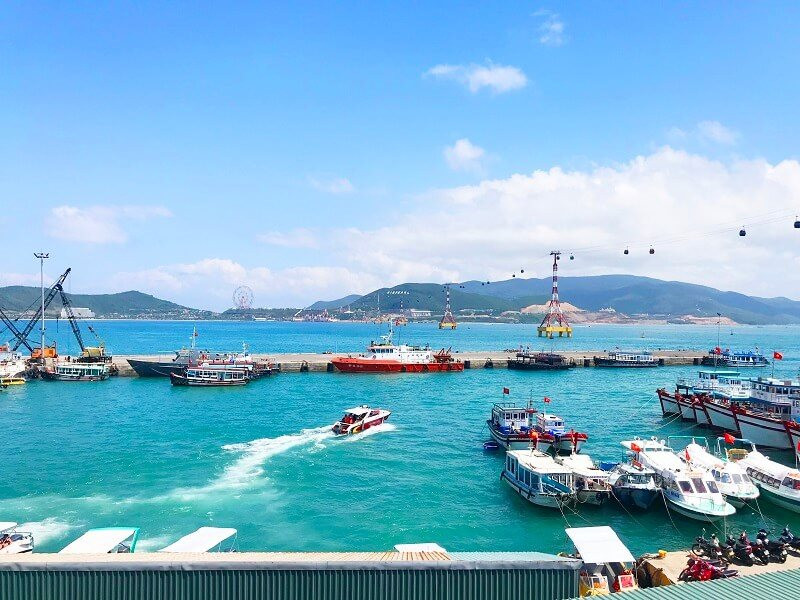
Developing a Greener and More Competitive Port System
Khanh Hoa is implementing its 2026–2030 seaport development plan alongside Decision No. 3848/QD-UBND, which approves the province’s Green Port Transition and Development Scheme. The approach brings port expansion and environmental improvement into the same development framework.
Following the administrative consolidation described in the provincial plan, Khanh Hoa’s seaport network comprises six main areas: North Van Phong, South Van Phong, Nha Trang, Cam Ranh, Ca Na and Ninh Chu.
The province has 21 terminals and 42 berths, with a combined quay length of nearly 8.8 kilometres. The network includes facilities capable of receiving vessels of up to 400,000 tonnes, subject to the conditions of the relevant berths.
The port system supports industrial production, cargo imports and exports, maritime services and regional trade. In the Truong Sa area, the green transition must also accommodate both national defence and civilian responsibilities.
Initial Green Port Assessments Reveal Uneven Progress
An initial self-assessment of 18 operating terminals produced an average score of approximately 2.5 out of 5.
Four terminals scored at least 3.5, the threshold used in the assessment framework. HD Hyundai Vietnam Shipyard’s terminal ranked highest at nearly 4.4, followed by the K662 petroleum terminal and Cam Ranh International Port, both at around 3.8, and South Van Phong General Port, above 3.5.
The scoring was based on TCCS 02:2022/CHHVN, which assigns a weight of 50% to action and implementation, 30% to commitment and readiness, and 20% to effectiveness and efficiency.
These are preliminary self-assessment results, not proof that the four terminals have received independently verified green port certification. Operators are expected to standardize their supporting documentation.
Under the provincial roadmap, all operating terminals are expected to complete baseline environmental data and establish their initial emissions profiles by 2027. By 2030, all new port projects are expected to meet green criteria from the investment-preparation stage.
Defining Distinct Roles for Six Port Areas
The development plan allocates functions according to each port area’s characteristics and projected cargo demand.
The combined planned handling capacity of the principal northern port group is 41.2–63.4 million tonnes per year, excluding the southern cluster.
South Van Phong is designated as a principal cargo gateway, with planned capacity of 24–37.4 million tonnes per year. The plan provides for bulk carriers of up to 300,000 tonnes and a container terminal capable of serving vessels of up to 18,000 TEU.
North Van Phong is intended to become an international transshipment hub, with a planned capacity of 11.68–18.2 million tonnes per year and a design direction for handling container ships of up to 24,000 TEU.
Cam Ranh is oriented toward general cargo, links with the Central Highlands and national defence requirements, with a planned capacity of 6–7.72 million tonnes per year.

Nha Trang is to transition into a specialized international passenger port for ships of up to 225,000 GT, alongside the planned relocation of the Mui Chut petroleum mooring facility away from the urban centre.
In the southern cluster, Ca Na has a planned capacity of 15.4–17.58 million tonnes per year and is oriented toward liquid bulk, liquefied natural gas (LNG) and container services, including provision for container vessels of 100,000 tonnes or more.
Ninh Chu is being reoriented toward tourism, services and local freight.

Cleaner Equipment, Renewable Energy and Shore Power
The green transition plan encourages port operators to install rooftop solar power at warehouses and logistics facilities, gradually replace conventional quay cranes and forklifts with electric equipment, use energy-efficient LED lighting and conduct regular energy audits.
A particularly important measure is onshore power supply (OPS).
When suitable shore-power infrastructure is available, berthed vessels can use electricity supplied from land rather than running auxiliary diesel generators, reducing emissions and noise around the terminal.
Khanh Hoa aims to pilot medium-voltage OPS at at least three terminals: Nha Trang after its functional conversion, Ca Na General Port and South Van Phong General Port.
The province is also studying preferential vessel procedures and berth arrangements for operators meeting green criteria, while proposing suitable electricity pricing and maritime fee incentives for cleaner ships.
Operators are encouraged to adopt ISO 14001 environmental management, ISO 50001 energy management and greenhouse-gas measurement, reporting and verification (MRV) systems.
These measures could support longer-term emissions management and readiness for carbon-market mechanisms, in line with Vietnam’s net-zero ambition for 2050.
Digital Port Operations to Improve Cargo Clearance
Alongside energy measures, Khanh Hoa is pursuing port digitalization.
The plan includes e-Port services, automated gates and cashless payments, connected through the province’s shared data integration platform (LGSP).
The proposed system would support information exchange between terminals, shipping lines and customs authorities, including container identification through camera-based recognition technology.
Better coordination could reduce administrative processing, vessel turnaround time and cargo storage delays for importers and exporters.
These improvements remain development objectives. Their actual impact will depend on system deployment, data interoperability and adoption by port operators and logistics businesses.
Connecting Seaports with Roads, Railways and Industrial Zones
Port expansion must be matched by inland transport connections and reliable sources of cargo.
During 2026–2027, the province is prioritizing projects including the Khanh Hoa–Buon Ma Thuot Expressway, improvements to National Highway 26B serving South Van Phong, road connections between the North–South Expressway and Ca Na Port, and progress on the proposed Nha Trang–Da Lat Expressway.
Khanh Hoa also plans specialized freight railway connections to South Van Phong, Cam Ranh and Ca Na.
Combined with coastal shipping and road transport, these rail links could create more flexible cargo routing options and, where commercially viable, reduce reliance on trucking for certain movements.
To support future cargo demand, the province is preparing land for seven satellite industrial parks: Ninh Xuan 1, Ninh Xuan 2, Ninh Son, Xuan Son, South Cam Ranh, Dien Tho and Ca Na Phase 2.
The aim is to attract processing and manufacturing activities that can generate stable cargo flows for the port system.

Mobilizing Public and Private Investment
Implementation responsibilities are being divided by infrastructure type.
Public funding is directed toward shared transport and other public connections; public–private partnerships (PPP) are envisaged for major transport links and waste-treatment facilities; and port operators are expected to invest directly in berths and green technologies.
Such a division is designed to encourage private investment while ensuring that the transport infrastructure connecting ports, industrial areas and logistics hubs develops in a coordinated way.
The province is also considering support measures for cleaner vessels and port operators, rather than relying solely on physical infrastructure expansion.
Khanh Hoa’s strategy reflects a broader transition in maritime logistics: future competitiveness will depend not only on quay length or vessel size but also on energy performance, digital efficiency, inland connectivity and the ability to attract stable cargo volumes.
With implementation aligned to the approved plans, the province could strengthen its role in domestic and international shipping while pursuing more sustainable port operations.
Source: https://congthuong.vn
https://camranhport.vn
https://svpp.vn
https://konoikevina.com
https://kinhtemoitruong.vn/
Viet Star Shipping Agency Co., Ltd.
📞 +84 3930 01002
🏘️27-29 Ngo Thi Bi Street, Tan Hung Ward, Hochiminh City