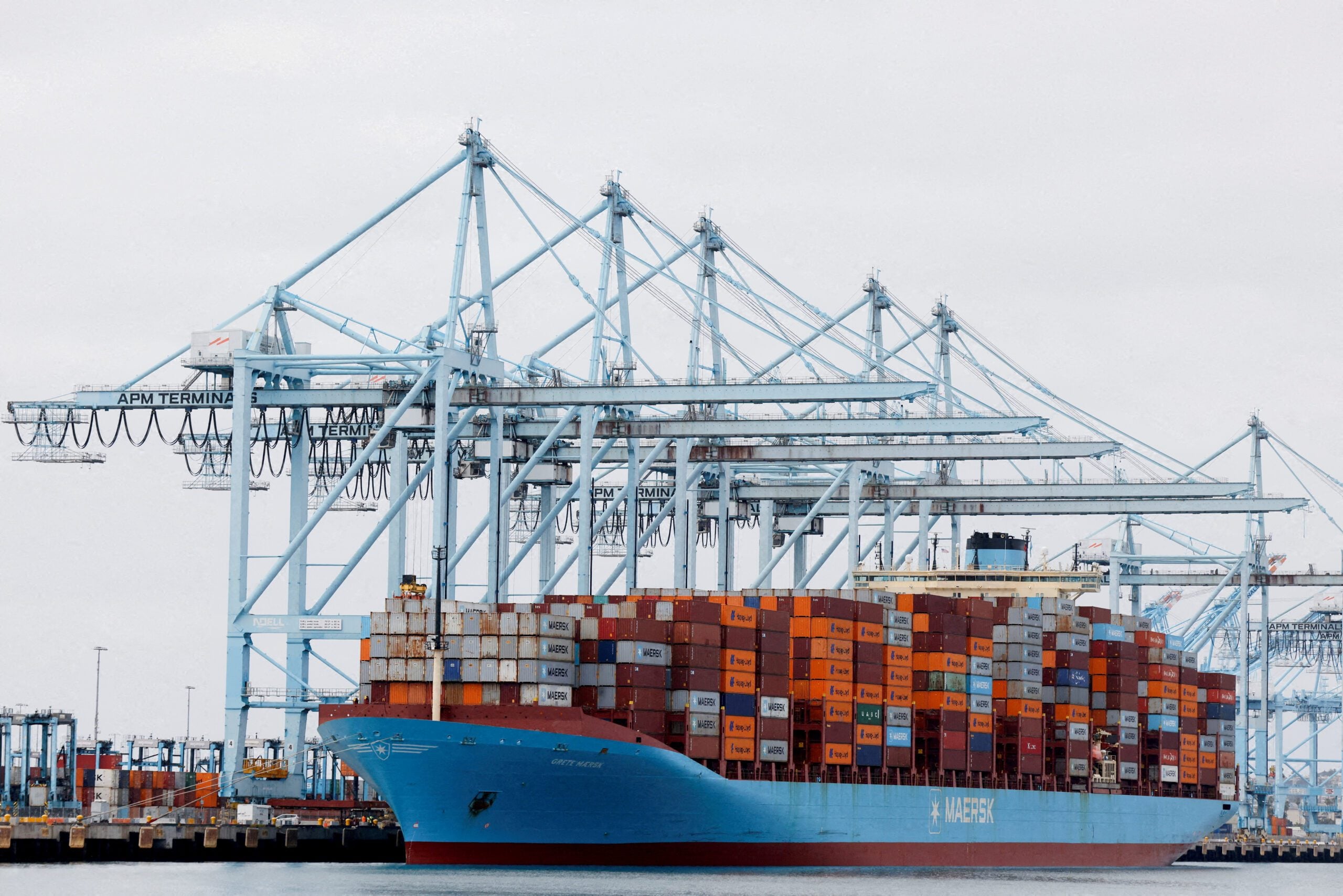
Import container volume through the Ports of Los Angeles and Long Beach exceeded 1 million TEU in October 2026, marking the second time this year that this threshold has been crossed. Demand for imports of AI infrastructure equipment, proactive front-loading of cargo ahead of tariff policy changes, and inventory restocking activity continue to drive cargo throughput through this key U.S. port complex.
Import Container Volume Remains Elevated
According to Bloomberg, total import container volume through the Ports of Los Angeles and Long Beach reached 1,000,500 TEU in October 2026, marking the second time this year that monthly import volume through the two ports has surpassed the one-million TEU mark. This result was only slightly below the record high posted in September, indicating that import activity through Southern California continues to maintain strong growth momentum despite volatility in the international trade environment.
The Ports of Los Angeles and Long Beach, located in Southern California, are critical gateways connecting U.S. trade with Asian markets. Given their role in handling large volumes of seaborne cargo, throughput performance at the two ports typically serves as a fairly clear indicator of import trends, consumer demand, and cargo flows on Trans-Pacific trade lanes.
Data released by the ports shows that, in October 2026, total container volume — comprising imports, exports, and empty containers — at the Port of Los Angeles grew more than 20% year over year. The Port of Long Beach posted a corresponding increase of more than 11%.
This growth indicates that operations at the two ports remain brisk, with imports playing a significant role. However, it is important to distinguish that these growth rates reflect total port-wide container volume, not import cargo volume alone.
Mr. Gene Seroka, Executive Director of the Port of Los Angeles, attributed the sustained growth in cargo activity to multiple factors, including changes in trade policy, instability on global shipping lanes, U.S. consumer purchasing power, and retailers’ inventory restocking needs.
These factors are simultaneously shaping importers’ sourcing decisions. Rather than relying solely on actual consumption demand at any given time, many importers must factor in potential risks arising from trade policy, transit times, and possible supply chain disruptions. Bringing cargo in early has therefore become one of the options businesses consider in order to maintain supply availability and mitigate the risk of stockouts.
AI-Related Cargo Demand Fueling Imports

One of the notable drivers behind the increase in cargo volume through Southern California ports is demand tied to the buildout of artificial intelligence infrastructure.
The rapid expansion of the AI sector has driven substantial investment in data centers, server systems, and related technology equipment. Constructing and operating this infrastructure requires large volumes of equipment, components, and supplies, a portion of which is shipped via international ocean trade lanes into the U.S. market.
Mr. Noel Hacegaba, Executive Director (CEO) of the Port of Long Beach, said that cargo supporting AI development is one of the contributors to volume growth at the port. According to him, demand for shipments related to this sector is helping keep container volumes elevated.
Notably, AI-related import demand differs in character from several conventional consumer goods segments. Investment in data centers and technology infrastructure is typically tied to large-scale projects requiring a continuous supply of equipment and materials. The growth of this sector can therefore generate additional cargo for ocean shipping lanes, while also increasing demand for port handling services, inland transportation, and warehousing.
For logistics companies, this is a trend worth watching, as the structure of international cargo flows is being increasingly shaped by emerging technology industries. Beyond consumer goods, industrial equipment and components supporting digital infrastructure are becoming an important component of global trade flows.
U.S. Businesses Accelerate Imports Ahead of Trade Agreement Expiry
Alongside AI-driven demand, tariff policy uncertainty continues to influence the import strategies of U.S. businesses.
According to Bloomberg, importers are increasingly moving cargo forward ahead of the expiry of the U.S.–China trade truce in January 2027. Proactive early imports are viewed as a measure to mitigate potential risks should the trade environment between the two economies continue to shift.
In the context of unstable tariff policy, businesses must consider not only purchase prices but also potential additional costs should import duty levels change. This makes order placement and shipping timing a factor that directly affects business planning.
Rather than waiting for market demand to materialize, some businesses opt to import early to secure supply, maintain safety stock, and reduce the risk of incurring higher costs down the line. This trend has accelerated cargo movement through seaports, particularly the gateways handling large volumes of goods from Asia.
Mr. Noel Hacegaba forecasts that container volume moving through the Port of Long Beach will remain elevated at least through early 2027. Speaking with Bloomberg last week, he said port operations could stay brisk in the first month of the new year and potentially extend through the end of Q1 2027.
This assessment suggests that current shipping demand is not merely seasonal but is also being shaped by import decisions made in response to trade risks. If businesses continue to pursue front-loading strategies ahead of the agreement’s expiry, container volumes at Southern California ports could remain elevated in the early months of next year.
That said, this outlook remains contingent on trade policy developments, U.S. consumer purchasing power, and businesses’ ability to adjust their import plans in the period ahead.
Exports Decline While Empty Container Volume Surges

In contrast to the import upswing, exports through Southern California’s two largest ports recorded a downward trend in October 2026.
Specifically, export volume through the Port of Los Angeles fell 7% year over year, while the Port of Long Beach posted a 6% decline. This development indicates that container volume growth in the region has been driven primarily by imports, with the export side yet to show corresponding gains.
Another notable point is the significant increase in empty containers moving through the two ports. At Los Angeles, empty container volume rose 26%, while at Long Beach it climbed 13% year over year.
According to Bloomberg’s reporting, the rise in empty containers indicates that ocean carriers are repositioning equipment to support more sailings from Asia to the U.S.
In international container shipping, balancing empty container repositioning is critical to a carrier’s operational capacity. Once cargo is discharged at the destination port, containers must be moved, repositioned, or returned to areas with export loading demand.
When import volume surges but exports do not keep pace, equipment imbalances can emerge across regions. Carriers must therefore plan empty container repositioning to ensure sufficient equipment for subsequent voyages.
For Southern California ports, the surge in empty containers reflects equipment repositioning needs against the backdrop of sustained high import flows from Asia. This also demonstrates that logistics operations depend not only on laden container throughput but are also significantly influenced by transport equipment management and container turnover.
If the gap between import and export volume persists, empty container coordination will become a key element in carriers’ and freight forwarders’ operational planning.
Import Volume May Ease in Early 2027
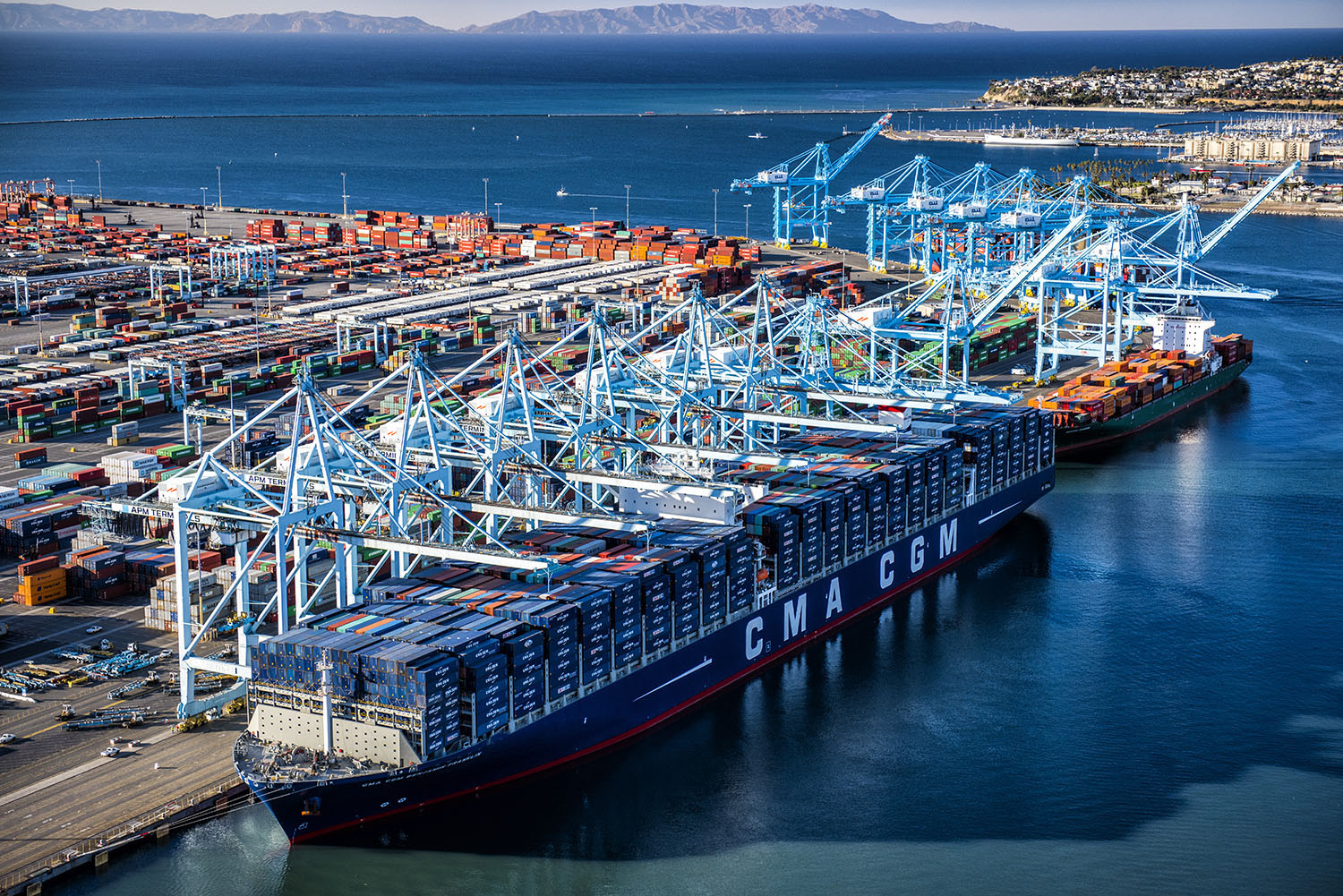
Although cargo volumes through major U.S. ports remain elevated, the import outlook for the coming months is expected to cool.
According to the National Retail Federation (NRF), import growth at some of the nation’s busiest seaports is projected to taper off toward the end of 2026. Notably, import volume in January 2027 is forecast to decline 3% year over year.
Mr. Jonathan Gold, NRF’s Vice President for Supply Chain and Customs Policy, noted that cargo volumes remain very high even as the peak shipping season gradually winds down.
This assessment highlights the difference between actual cargo volumes in the current period and the import outlook for the months ahead. Businesses bringing cargo in early may cause container volumes to concentrate in the final months of the year, ahead of an anticipated import slowdown in early 2027.
For the logistics industry, this shift raises the bar for volume forecasting and resource allocation. Ocean carriers must balance fleet deployment plans, sailing schedules, and empty container inventory, while port operators must proactively adjust labor, equipment, and cargo-handling capacity.
If import volume declines after the peak surge, supply chain stakeholders should also avoid overbuilding operational capacity beyond actual demand. Maintaining operational flexibility will play a key role in limiting cost overruns as volumes fluctuate.
Congestion Risk Rising at U.S. West Coast Ports
Beyond the elevated volume outlook, the sharp rise in cargo is also adding pressure on the logistics system at major U.S. ports.
Mr. Jonathan Gold said that high cargo volumes have led to congestion, particularly for rail-bound cargo at major U.S. West Coast ports.
This is a pressing concern because port operations do not stop at discharging containers from vessel to yard. Once customs clearance is completed and cargo is released, containers must continue to move to distribution centers, warehouses, and manufacturing facilities in inland areas.
Rail transport is a critical link in moving containers from West Coast ports to locations deep within the U.S. interior. When import volume rises rapidly, demand for rail services rises in tandem, straining receiving, loading/unloading, and cargo dispatch capacity.
If container out-gating from ports cannot keep pace with vessel discharge speed, container dwell on terminal yards may increase. This not only affects the ability to receive subsequent vessels but also lengthens container dwell time, raises demurrage and yard storage costs, and disrupts inland transportation schedules.
Maintaining coordination among port authorities, rail operators, ocean carriers, and inland transportation providers is therefore essential to mitigating supply chain disruption risk.
Strike Risk at the Ports of Los Angeles and Long Beach Ahead of the November 20 Deadline
Another factor that could affect operations at the two Southern California ports is the disagreement in ongoing negotiations between the union representing port security personnel and their employers.
According to Mr. Jonathan Gold’s warning, operations at the Ports of Los Angeles and Long Beach risk disruption if the two parties fail to reach an agreement before the November 20, 2026 deadline.
With container volumes still elevated, any port labor-related disruption could add further strain to the supply chain. Security screening, gate operations, and terminal support activities all play a role in keeping cargo flowing.
Should a strike occur or operations be curtailed, containers could face longer port dwell, delivery schedules would shift, and import-export businesses’ transportation plans would be affected.
In particular, for businesses currently accelerating imports to build year-end inventory, delays at major ports could heighten delivery lead-time and logistics cost risks.
The outcome of labor negotiations ahead of the November 20 deadline is therefore one of the key factors to monitor for the U.S. ocean shipping market in the final stretch of 2026.
Outlook for Southern California Port Operations
Developments at the Ports of Los Angeles and Long Beach show that U.S. import activity continues to be shaped simultaneously by consumer demand, technology investment, and instability in international trade policy.
Total import container volume surpassing the one-million TEU mark in October 2026 reflects the strength of cargo flows into the U.S. market. Within that, demand for AI infrastructure and the trend of proactive front-loading ahead of tariff changes have become significant tailwinds for ocean shipping.
However, rising volumes also bring a host of challenges for the logistics system – from rail congestion and empty container imbalances to the risk of operational disruption from port labor disputes.
In the months ahead, U.S. – China trade policy developments, consumer purchasing power, and the ability to maintain the supply of equipment for the technology sector will continue to influence business import decisions.
Additionally, NRF’s forecast of a 3% decline in imports in January 2027 suggests the market may enter an adjustment phase once year-end front-loading activity concludes.
For ocean carriers and logistics companies, closely tracking volume fluctuations at Southern California ports will enable more proactive operational planning, container positioning, and inland transportation arrangements. This will also serve as a basis for assessing Trans-Pacific trade trends in early 2027.
Source:
https://logistics.gov.vn
https://gcaptain.com
Viet Star Shipping Agency Co., Ltd.
📞 +84 3930 01002
🏘️27-29 Ngo Thi Bi Street, Tan Hung Ward, Hochiminh City