Vietnam Seeks to Strengthen Its Maritime and Logistics Position
With its long coastline, proximity to major international shipping routes, and highly trade-oriented economy, Vietnam has significant potential to become a more important player in regional maritime and logistics networks. However, realizing this potential requires more than expanding port capacity. The country must improve service quality, strengthen domestic businesses, and capture greater value across the maritime supply chain.
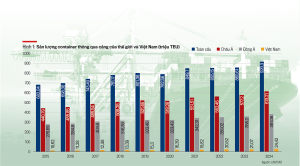
According to the United Nations Conference on Trade and Development (UNCTAD), maritime transport accounts for more than 80% of global merchandise trade by volume. Nevertheless, the shipping industry is undergoing significant changes driven by geopolitical tensions, shifting trade patterns, freight rate volatility, decarbonization requirements, and rapid technological development.
In this environment, a country’s competitiveness depends not only on the size of its ports but also on its ability to manage transportation networks, coordinate supply chains, and provide high-value maritime services.
For Vietnam, the priority is to develop an integrated maritime and logistics ecosystem that can turn its geographical advantages into sustainable economic value and strengthen the role of domestic businesses in global trade.
Port Development Must Generate Greater Economic Value
Port Throughput Is No Longer the Only Measure of Success
Vietnam’s seaport system has made significant progress in recent years, with improvements in infrastructure, handling capacity, and international connectivity. The development of deep-water ports in the northern and southern regions has enabled the country to accommodate larger vessels and improve direct connections with international markets.
However, higher port throughput does not automatically translate into greater economic value for Vietnamese businesses.
To maximize the benefits of port infrastructure, Vietnam needs to develop supporting services, including multimodal transportation, warehousing, distribution centers, international freight forwarding, marine insurance, maritime finance, ship repair, fuel supply, and logistics technology.
When these services operate as an integrated network, seaports can become more than cargo handling and transshipment facilities. They can serve as economic hubs that generate additional revenue, create skilled jobs, and support the development of high-value industries.
Strengthening the Domestic Shipping Fleet and Maritime Services
In addition to port infrastructure, the domestic shipping fleet is a critical factor in Vietnam’s ability to participate in international maritime transport.
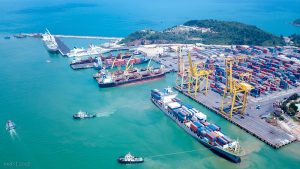
If domestic shipping capacity cannot meet market demand, importers and exporters may remain heavily dependent on foreign shipping lines. As a result, a substantial share of freight revenue and supply chain control may remain outside the domestic economy.
Vietnam therefore needs to modernize its fleet, improve energy efficiency, enhance operational safety, and strengthen its ability to serve international shipping routes.
At the same time, the country should expand supporting services such as ship management, shipping agencies, freight brokerage, marine insurance, maritime finance, ship repair, fuel supply, seafarer training, and technical services.
Developing these activities alongside ports and shipping fleets will help Vietnamese companies participate more actively in the maritime value chain.
Logistics Is Becoming a Key Driver of National Competitiveness
Balancing Cost, Transit Time, and Reliability
In international trade, logistics costs directly affect product prices and export competitiveness. However, logistics expenses involve more than freight charges. They also include warehousing, inventory holding, waiting times, customs procedures, transshipment, delivery delays, and unexpected disruptions.
As a result, reliability has become an increasingly important factor in logistics performance. Manufacturers and international buyers want to know not only how much transportation costs but also when their goods will arrive, how shipments can be tracked, and how service providers will respond to disruptions.
A competitive logistics system must therefore deliver three key outcomes: reasonable costs, reliable transit times, and operational resilience.
Vietnam’s Logistics Services Development Strategy for 2025–2035, with a vision to 2050, approved under Decision No. 2229/QD-TTg dated October 9, 2025, identifies logistics as an important economic sector with high added value and knowledge intensity. Its priorities include integrated infrastructure, regional connectivity, stronger domestic enterprises, digital transformation, green development, and high-quality human resources.
Improving Multimodal Logistics Connectivity
Disruptions to international shipping routes in recent years have highlighted the vulnerability of global supply chains to geopolitical and operational risks.
When vessels are forced to change routes, transit times increase and freight costs rise. Importers and exporters may face delayed deliveries, higher inventory costs, and difficulties meeting customer demand.
To reduce these risks, Vietnam needs stronger connections between seaports and road, rail, inland waterway, and air transport networks. Inland container depots, logistics centers, and distribution hubs should also be developed near industrial zones, manufacturing clusters, and major consumer markets.
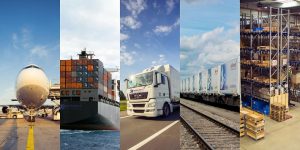
An integrated multimodal transport network can reduce logistics costs while providing alternative transportation options when individual routes or transport modes are disrupted.
Building a Competitive Maritime and Logistics Ecosystem by 2045
Expanding Development Beyond Seaports
Traditionally, maritime development has focused primarily on seaport infrastructure. However, a value-chain approach reveals a much broader range of opportunities.
These include port-adjacent logistics centers, industrial parks, inland ports, distribution hubs, ship repair facilities, maritime service zones, data centers, research institutions, and specialized maritime services.
The development of offshore energy could also create new demand for service ports, specialized transportation, equipment maintenance, and offshore logistics.
Coordinated planning across these sectors can help Vietnam establish integrated maritime economic clusters rather than allowing individual projects to develop in isolation.
Such clusters could attract investment, strengthen supporting industries, create skilled employment, and improve the competitiveness of coastal regions.
Developing Shared Infrastructure and Enhancing Maritime Safety
Investment in maritime infrastructure must be accompanied by more efficient capital allocation. Transport, logistics, energy, and data infrastructure should be planned to improve connectivity and enable shared use where appropriate, while meeting maritime security and safety requirements.
In areas where investment conditions are challenging, infrastructure designed to serve multiple functions can help reduce costs and improve utilization.
However, shared-use capabilities, scalability, and connectivity should be incorporated during the planning and design stages rather than added after construction has been completed.
Measuring Success Through Value Creation
To assess the real performance of Vietnam’s maritime and logistics industry, policymakers should monitor not only port throughput but also indicators that reflect economic efficiency and domestic participation.
Key indicators include:
- The share of import and export cargo transported by Vietnamese-owned shipping fleets.
- The proportion of logistics services provided by domestic companies.
- The share of high-value maritime services delivered by Vietnamese businesses.
- Port productivity and vessel and cargo turnaround times.
- Digitalization and shipment traceability across logistics networks.
- Emissions per unit of cargo transported.
- The proportion of freight moved by rail and inland waterways.
- Domestic capabilities in maritime engineering, finance, insurance, and technical services.
These indicators would provide a more comprehensive picture of industry development and help policymakers and businesses make better-informed investment decisions.
Vietnam’s 2030 Targets Provide a Foundation for Its 2045 Vision
The targets cited in the source article include increasing the share of import and export cargo carried by Vietnam’s domestic shipping fleet to 20% by 2030 and reducing logistics costs to below 12% of GDP.
These objectives reflect two important priorities: strengthening domestic participation in international shipping and improving the efficiency of cargo movement throughout the economy.
Achieving these goals will require continued investment in ports, fleet modernization, multimodal connectivity, digital transformation, green logistics, and the international competitiveness of Vietnamese service providers.
Looking toward 2045, Vietnam could aim for a stronger position in the Asia-Pacific maritime network, supported by competitive international gateways, integrated logistics infrastructure, and domestic companies capable of operating across regional supply chains.
High-quality human resources, advanced technology, maritime finance, insurance, and specialized engineering services will also be essential to long-term competitiveness.
Turning Vietnam’s Maritime Advantages into Sustainable Economic Value
Vietnam has favorable conditions for developing its maritime and logistics industry. However, geographical advantages alone cannot guarantee long-term competitiveness. They must be supported by modern infrastructure, capable domestic enterprises, advanced technology, and an integrated service ecosystem.
As global trade patterns continue to change, success should not be measured solely by the number of seaports, berths, or containers handled. A more important question is how much economic value Vietnam can generate and retain from international trade.
When Vietnamese businesses participate in more stages of shipping, logistics, finance, insurance, and maritime technical services, the industry can create higher-quality jobs, encourage technological innovation, and strengthen national competitiveness.
Building an integrated maritime and logistics ecosystem is therefore a crucial step toward transforming Vietnam’s geographical advantages into stronger supply chain capabilities and a more influential position in global trade value chains by 2045.
Source:
https://vimc.co
https://vneconomy.vn
Viet Star Shipping Agency Co., Ltd.
📞 +84 3930 01002
📩 info@vssa.com.vn
🌐 www.vssa.com.vn
🏘️27-29 Ngo Thi Bi Street, Tan Hung Ward, Hochiminh City