Shipping traffic through the Strait of Hormuz has fallen to its lowest level in two months amid rising risks of vessel attacks. Meanwhile, oil transportation costs have surged, and Brent crude prices have climbed above $102 per barrel.
Shipping Traffic Through the Strait of Hormuz Continues to Decline
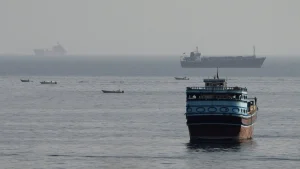
Shipping traffic through the Strait of Hormuz, one of the world’s most important energy transportation routes, has fallen to its lowest level in two months amid escalating military tensions and an increased risk of attacks on commercial vessels. These risks have intensified since the conflict between the United States and Iran began.
Data from analytics firm Kpler showed that only seven cargo vessels passed through the Strait of Hormuz on October 6, marking the lowest level since July 23. The number of oil tankers subsequently increased to 10 on October 7. However, this remained significantly below the more than 20 vessels per day recorded on October 4 and 5.
Kpler experts reported that crude oil shipments through the Strait of Hormuz had fallen by 27% from their peak during the conflict the previous week, declining to approximately 10.1 million barrels per day. Although volumes have returned to the average level recorded in September 2026, they remain at just 74% of pre-conflict levels.
Some oil shipments have shifted to ship-to-ship transfers in the Gulf of Oman to address restrictions on navigation through the main shipping route.
Alternative Oil Export Routes Help Offset Supply Disruptions
Although shipments through the Strait of Hormuz have declined, crude oil exports from the Gulf of Oman and the Red Sea coast have increased to approximately 6.7 million barrels per day, or roughly double the pre-conflict level.
This increase has helped offset the decline in oil shipments through the Strait of Hormuz, allowing total crude oil exports from the Middle East to remain close to pre-conflict levels.
One key piece of infrastructure is Saudi Arabia’s East-West Pipeline, which transports oil from production fields in the east to the port of Yanbu on the Red Sea coast. This enables producers to export oil through alternative routes rather than relying exclusively on the Strait of Hormuz.
However, this infrastructure remains exposed to threats and attacks that could disrupt the continuity of oil exports across the region.
Vessel Attacks Reach Their Highest Level Since the Conflict Began
Data from maritime authorities cited in reports indicated that attacks on vessels transiting the Strait of Hormuz had reached their highest level since the conflict began. The attacks occurred as Middle Eastern oil producers attempted to increase exports despite the risks to crew members’ lives and potential cargo damage.
On October 7, the United Kingdom Maritime Trade Operations (UKMTO) reported that several people had been killed after a vessel off the northern coast of Qatar was struck by multiple airborne objects.
Saul Kavonic, Head of Energy Research at MST Marquee, assessed that the frequency of attacks on vessels associated with Iran had reached its highest level since the war began and was likely to increase further.
Security risks have forced shipping companies to strengthen protective measures. Reports also indicated that some operators were offering substantial financial incentives to encourage crew members to travel through high-risk shipping routes.
Seafarers Offered High Compensation in Exchange for Dangerous Voyages
A Qatari media report dated October 8 stated that shipping traffic through the Strait of Hormuz had fallen to its lowest level since July. Meanwhile, some seafarers were receiving special bonuses for voyages through the waterway.
Some ship captains could receive base salaries of up to $100,000, along with a bonus of $50,000 per voyage. Compensation varies depending on the company and the nature of the journey. Ordinary crew members could receive wages approximately four to six times higher than usual.
A maritime recruitment company in China’s Shandong province was reportedly offering bonuses of up to $25,000 for a single round trip. For some crew positions, this amount could be equivalent to more than a year’s income.
Despite the high compensation, crew members must contend with stringent security measures. Reports indicated that some vessels switched off their lights and automatic identification systems (AIS) while transiting the area to reduce the likelihood of detection. In addition, some crews used sandbags to reinforce sections of their decks in an effort to protect against drone or missile attacks.
These measures highlight the growing risks facing the maritime shipping industry, which plays a critical role in the global energy supply chain.
Surging Oil Transportation Costs Put Pressure on Global Energy Markets
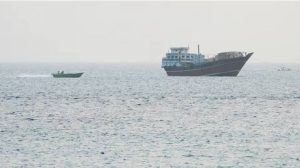
A U.S. media report dated October 5 stated that shipping companies were spending approximately $30–40 million on oil transportation involving ship-to-ship transfers to move oil into and out of the Strait of Hormuz.
Rising logistics costs, combined with shipping route restrictions and the threat of attacks, have placed additional pressure on energy markets, even as Middle Eastern producers have managed to increase exports through alternative routes to some extent.
Before the conflict began in late February, approximately 125 large vessels passed through the Strait of Hormuz each day. These included oil tankers, gas carriers, bulk carriers, and container ships. The waterway handles approximately one-fifth.
Source :
www. baotayninh.vn
www.vietnam.vn
Viet Star Shipping Agency Co., Ltd.
📞 +84 3930 01002
🏘️27-29 Ngo Thi Bi Street, Tan Hung Ward, Hochiminh City